

One Message, Every Touchpoint · Series 1 · Part 4 of 7
Here’s what a truly thoughtful first-visit journey can look like, start to finish.
Someone fills out a Plan a Visit form or registers their kids online. Within moments, they get a warm, friendly response — on the website, by text, and by email — with a few genuinely helpful details: please park in our visitor parking near the doors, and when you come in, stop by our welcome kiosk or coffee bar and ask for [two real names]. They’ll walk your kids through check-in, answer any questions, and there’s a fun gift waiting for the kids — or a small welcome gift, a cup of coffee, and a gift card to a local coffee shop to enjoy sometime that week.
They arrive. They pick up their coffee and the kids’ gift. A volunteer greets them by name, because they were told to expect them — introduces them to a couple of people, and walks them toward the service. That volunteer hopes to catch them afterward, remembers their names (because the team huddled on it that morning), and makes a point of introducing them to a pastor on the way out.
Personal touchpoint, after personal touchpoint, after personal touchpoint.
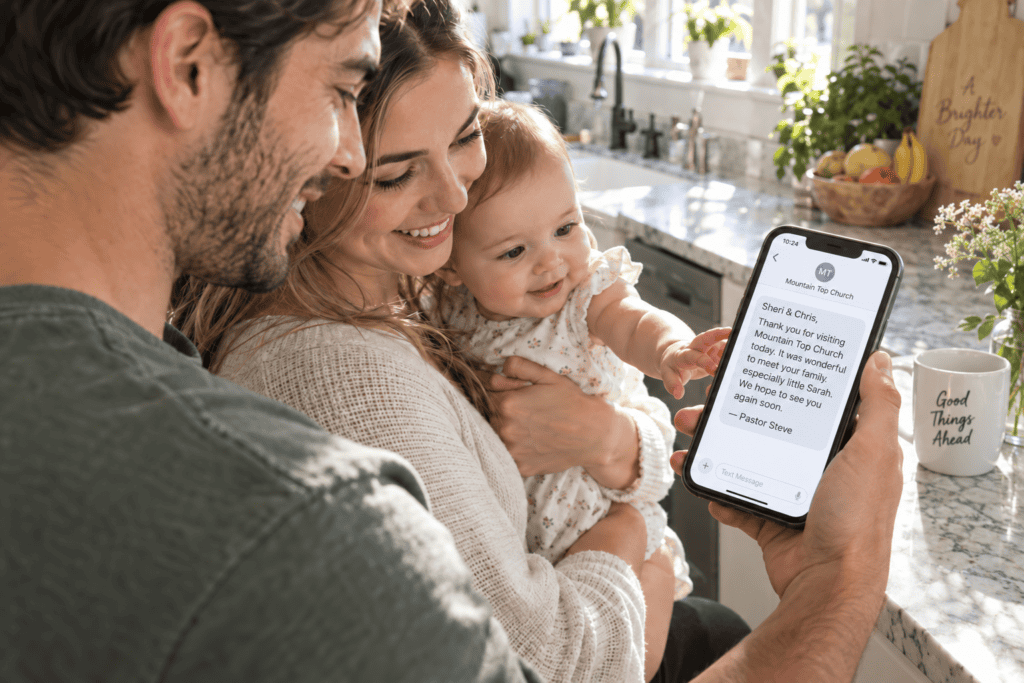
Then, someone lets the church office know the family actually showed up — and that’s the trigger that starts the automated follow-up system. Not before.
That timing matters more than it seems. It’s tempting to build a system that fires the moment someone fills out a form, sending a friendly “hope you enjoyed the service” text the next morning. But if they planned to visit and something came up — a sick kid, a work call, a change of plans — that message doesn’t read as thoughtful. It reads as strange, even a little unsettling: how did they know I didn’t show up? Exceeding someone’s expectations means being present and attentive. Automating a message that assumes something that didn’t happen isn’t hospitality — it’s just noise wearing hospitality’s clothes.
Done well, the sequence is simple: real people create real moments, and the automated system picks up after those moments are real — reinforcing what already happened, not guessing at what might have.
(True Engagement’s follow-up and database tools are built to work exactly this way — triggered by real visits, not just form submissions.)
The takeaway: this is Compel. A real follow-up, timed off a real visit, is what turns “we hope you enjoyed it” into an actual next step someone wants to take.
← Previous: Part 3 — The First Four Minutes
Next: Part 5 — The Welcome Gift — Thoughtful vs. Transactional →
Explore all seven articles in One Message, Every Touchpoint →
Responses